
Maps and Stages in Godzilla Melee Remastered
Eight locations, day and night, weather on top. Here is how each city fights.
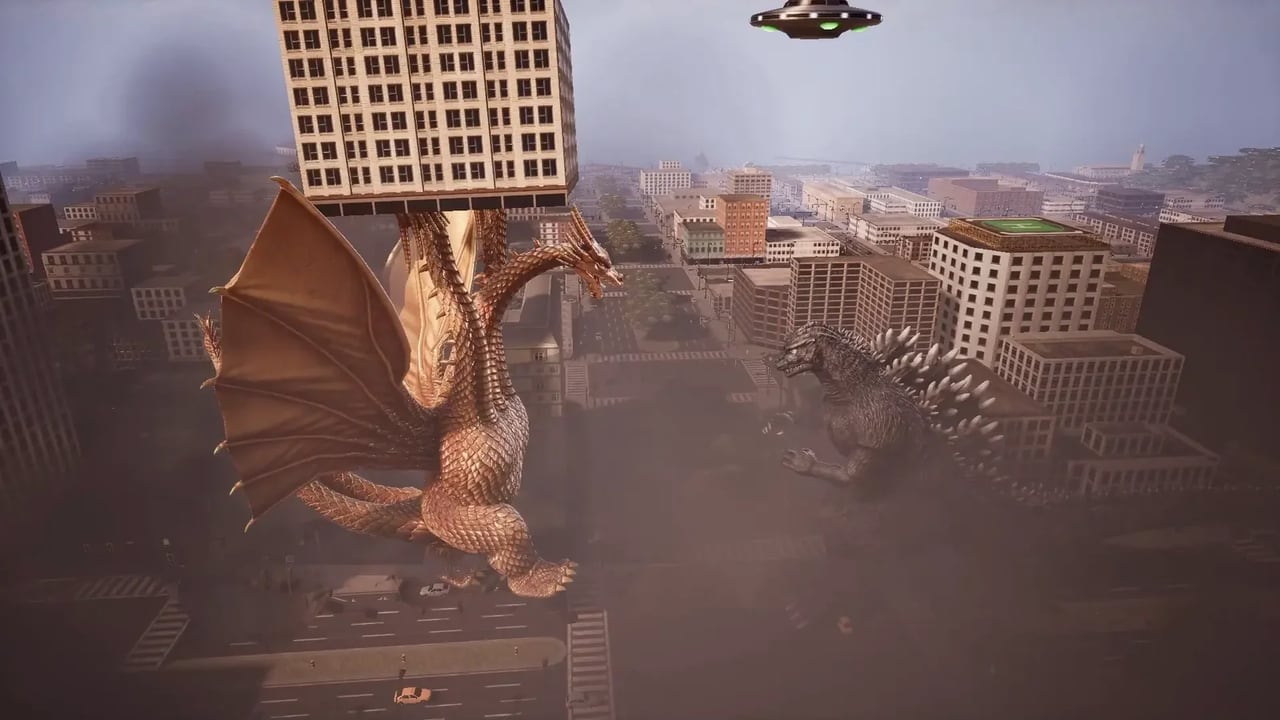
Godzilla: Destroy All Monsters Melee Remastered ships eight locations, each with day and night variations. That is sixteen looks over the same eight collision maps, plus weather called out in August 2026 coverage of the overhauled UI. The cities are not decorative. Narrow Tokyo streets change grab confirms. Monster Island has almost nothing to throw. The Vortaak Mothership throws out civilian geometry entirely. Learn the list before you host online melee and before you blame your starter kaiju for a loss that was really a stage pick.
Atari named real-world cities, Monster Island, and the alien Mothership in the announcement. The 2002 set is the set: Tokyo, Osaka, San Francisco, Seattle, Los Angeles, London, Monster Island, Mothership. Xbox extras like the boxing ring and Vortaak homeworld are not in the eight-location pitch. Do not expect them until someone at Pipeworks says otherwise.
Tokyo
Dense, vertical, and the postcard. Skyscrapers create beam cover and knockdown traps. Day Tokyo reads cleaner. Night Tokyo is the trailer look: sirens, signage, atomic green on glass. Weather — rain especially — will matter more here than on Monster Island because reflections and wet streets are how Unreal Engine 5 sells the remaster. Play Tokyo when you want to practice destruction as a weapon. Play something else if you are still learning to walk.
Full Tokyo versus district slices existed in 2002 (industrial, commercial). The remaster has not shown whether those sub-arenas return as separate rows or as camera extents. Until the demo, assume one Tokyo select with day/night.
San Francisco
Wide approaches, hills in the original layout, bridges and water as psychology more than as swim mechanics. King Ghidorah’s Adventure fight lived here for Heisei Godzilla. It is a good online starter stage because you can see people. Flyers have room. Keep anti-air ready; see Rodan notes.
Osaka
Split personality in 2002: industrial east, castle west, full map if you unlocked it. Castle geometry creates weird grab corners. Industrial is a Destruction farm. If the remaster only ships “Osaka,” it is probably the full layout. Megalon liked this city in the old path. Drill users still will.
London
Tighter than San Francisco, more landmark clutter, good for melee punch fighters like Anguirus who want walls behind the opponent. Mecha-King Ghidorah’s old Adventure slot sat here. Night London plus rain is the screenshot you will see on Steam for a month.
Los Angeles
Downtown plus the airport slice in the original. Airport is a flyer playground with long sightlines for beams. Downtown is a building buffet. Destoroyah’s path used LA; if you are practicing that kit, do it here so the tier list numbers mean something in the space you will actually fight.
Seattle
Rodan lived here on the Heisei path. Open sky, space needle energy, less junk than Tokyo. If weather includes fog, Seattle is where you will notice it first. Tap projectiles over held beams when you cannot see Kiryu’s silhouette.
Monster Island
The tutorial wilderness. Few buildings, more rock, first fight for a lot of campaigns (Anguirus for Heisei Godzilla). Destruction Mode is weaker here because there is less city to eat. Military pressure is lower. It is the right CPU warmup and the wrong stage if you want to show off the remaster to a friend. Take them to Tokyo night instead.
Vortaak Mothership
Finale space. Alien lighting, limited civilian props, Mechagodzilla’s house. Jump trajectories feel different. Energy fights dominate. Read the Adventure walkthrough before you treat this as a casual Versus pick. In Melee with four players the Mothership can become a beam strobe; house rules that ban it for party night are reasonable.
Day, night, and weather
Day is readability. Night is marketing. Both are listed as real toggles, not filters. IGN’s hands-on specifically called out playing stages at night as a joy. Weather is newer information: community coverage after gamescom said stages can have weather conditions. Rain, storm, or clear are the obvious set. We will not invent snow on Osaka Castle until someone shows it.
Pick day when you are learning controls. Pick night when you already know the collision. Pick weather only after you have a main, because extra atmosphere is how people miss a Gigan charge.
Stage select advice
- Teaching a new player: Monster Island day, then Tokyo day.
- Beam character: Los Angeles airport energy or Seattle.
- Grab character: Tokyo or London.
- Flyers: San Francisco or Seattle.
- Party melee: Tokyo night, then San Francisco. Skip Mothership.
- Completing gallery: play every city at least once on Normal Adventure so pickups and shop discounts, if any, have a chance to appear. See unlocks.
The platform guide does not change stage lists; every SKU gets the same eight. What changes is resolution and, on Switch, handheld readability. If you play handheld, prefer day.
When the Steam demo lets us walk these maps in Unreal Engine 5, this page will add callouts for destructible landmarks. Until then, the eight names above are the whole atlas.
Frequently Asked Questions
Quick answers to the most common questions.
How many maps are in the remaster?
Eight locations, each with day and night. Weather is an extra modifier described in 2026 UI coverage.
Is the Xbox boxing ring coming back?
It is not part of the eight-location announcement. Treat it as unconfirmed.
Which stage is best for beginners?
Monster Island for movement, Tokyo day for destruction practice. Details in the advice list above.
Do I unlock maps the old way?
No. Locations can be unlocked in any order with currency. See Unlocks.